Alaska-Canada Shared Opportunities: Unlocking a Borderless Future
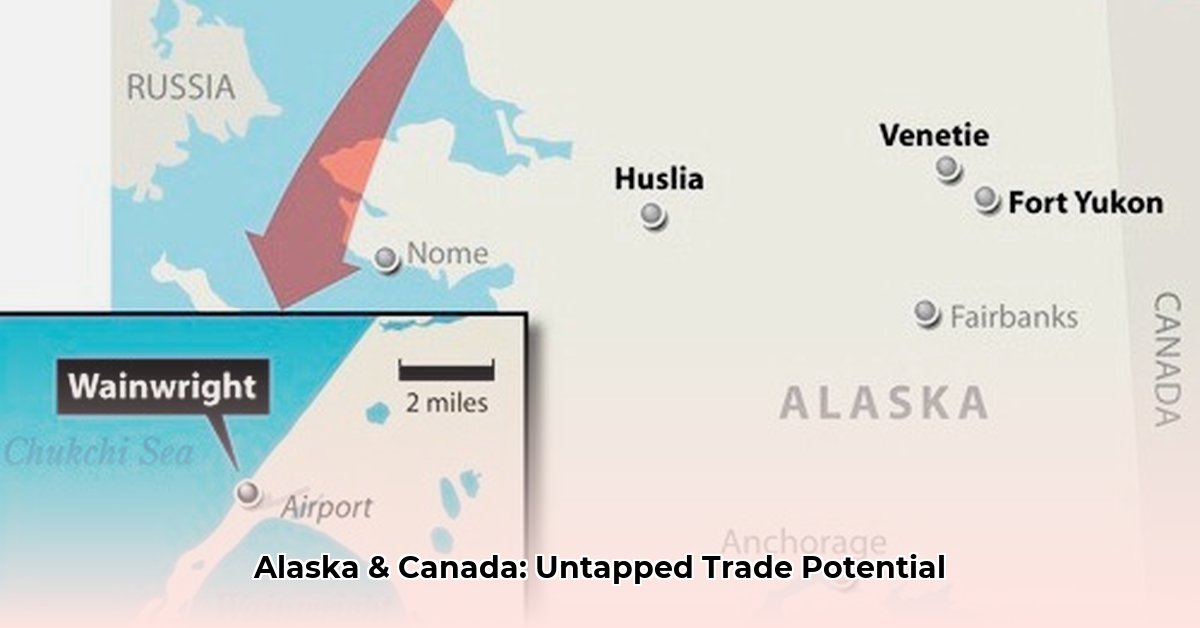
Imagine Alaska and Canada working together – a powerful partnership brimming with untapped potential. This isn't just about numbers; it's about building a brighter future for both sides of the border. This article explores the exciting possibilities and challenges of boosting trade between Alaska and Canada, offering actionable intelligence for businesses and policymakers alike. For a visual representation of the region, check out this Alaska-Canada map.
Did you know that trade between Alaska and Canada already generates over $1.3 billion annually, supporting thousands of Alaskan jobs? This isn't simply a statistic; it represents real people, thriving families, and growing communities. But are we maximizing this potential? The answer, in short, is no. This article outlines strategies to unlock that potential.
More Than Just Trade: A Deep-Rooted Partnership
Our relationship extends beyond economics. Alaska and Canada have a long history of collaboration in defense, through NORAD, and disaster relief, sharing resources and expertise during crises. This deep-rooted cooperation forms a strong foundation for enhanced economic ties.
The Economic Tapestry: Interwoven Destinies
The Alaskan and Canadian economies are profoundly intertwined. Canadian companies employ numerous Alaskans, significantly contributing to our state's economic well-being. Simultaneously, Alaskan businesses rely on Canadian markets, creating a vital two-way flow of commerce. This isn't a one-sided street; it's a mutually beneficial highway of commerce. But how do we accelerate down it?
Key Insight 1: The Alaska-Canada economic relationship is a deeply interwoven tapestry, with significant mutual benefits that are often overlooked.
Challenges on the Path to Prosperity: Navigating Uncertain Tides
However, several challenges threaten this economic flow. Trade policy uncertainty—including potential tariffs and border complexities—creates risk for businesses. Furthermore, aging infrastructure, such as the Alaska Highway and Shakwak Road, presents vulnerabilities. Disruptions to these critical supply lines could have severe economic consequences.
Key Insight 2: Infrastructure vulnerabilities and trade policy uncertainty represent significant hurdles to maximizing the Alaska-Canada economic partnership.
USMCA: The Roadmap to Smoother Cross-Border Trade
The USMCA (United States-Mexico-Canada Agreement) provides a framework for smoother trade. Understanding its intricacies is crucial for businesses. Proper record-keeping and compliance training are not mere bureaucratic hurdles; they're essential for navigating the agreement effectively and minimizing risks.
A Collaborative Roadmap: Steps Towards a Brighter Future
Optimizing this relationship requires collaboration. Here's a plan:
1. For Alaskan Businesses:
- Near-Term (0-1 Year): Prioritize USMCA compliance training; diversify suppliers; implement robust record-keeping.
- Long-Term (3-5 Years): Invest in technology to streamline trade; conduct proactive compliance audits; strengthen relationships with Canadian suppliers; explore new market opportunities.
2. For the Alaska State Government:
- Near-Term (0-1 Year): Lobby for favorable trade policies; secure funding for infrastructure upgrades; improve communication with Canadian counterparts.
- Long-Term (3-5 Years): Develop a comprehensive economic development plan; invest in climate-resilient infrastructure; forge stronger partnerships with Canadian provincial governments.
3. For the Canadian Government:
- Near-Term (0-1 Year): Maintain open communication; avoid trade barriers; contribute to joint infrastructure projects.
- Long-Term (3-5 Years): Expand resource management collaboration; enhance disaster response preparedness; strengthen defense and security cooperation; seek new economic partnerships.
4. For the US Federal Government:
- Near-Term (0-1 Year): Prioritize Alaska's needs in trade negotiations; ensure effective USMCA implementation.
- Long-Term (3-5 Years): Develop a long-term Arctic cooperation strategy focusing on the Alaska-Canada relationship; acknowledge the economic and strategic importance of this partnership.
Key Insight 3: A multi-pronged approach, involving businesses, state and federal governments, and Canada, is crucial for unlocking the full potential of the Alaska-Canada trading relationship.
Risk Assessment: Mitigating Potential Threats
A proactive risk assessment is vital. While some risks are low-probability, their potential impact is substantial. We must be prepared:
| Risk Factor | Likelihood | Impact | Mitigation Strategy |
|---|---|---|---|
| Trade disputes/tariffs | Medium | High | Proactive advocacy, diversification, strict USMCA compliance |
| Infrastructure failure | Low | High | Investment in maintenance & upgrades, contingency planning |
| USMCA compliance issues | Medium | Medium | Comprehensive training, expert advice, technology investment |
| Geopolitical instability | Low | High | Diversification, strengthening bilateral relations |
This partnership isn't just about numbers; it's about building a future where Alaskan and Canadian communities thrive together. Let's seize this opportunity and unlock a borderless future built on collaboration and mutual respect.